The Rosh Hashanah Seder, Simply Explained
Every autumn, the Jewish new year opens around a table where nothing is left to chance. Even before the first course, a small ritual full of sweetness takes place: the Rosh Hashanah Seder, an order of symbolic foods tasted while making wishes for the year ahead. Nothing complicated: a few bites, a few words, and a great deal of hope.
An Order, and Signs
Rosh Hashanah, the Jewish new year, is celebrated with a festive meal. Beyond the kiddush and the round challah dipped in honey, tradition includes a true “seder,” meaning an order, built around symbolic foods called simanim: signs.
The idea is as simple as it is luminous: the year begins with signs of good fortune. Each food becomes the vehicle for a wish, a way of saying out loud what we quietly hope for in the months ahead. According to tradition, these bites are eaten at the very start of the meal, as if to set the tone before the meal itself begins.
Opening the year with sweetness is already wishing it to be beautiful.
The Apple and the Honey
It is the best-known gesture, the one passed down from generation to generation: a slice of apple dipped in honey, accompanied by the wish for “a good and sweet year.” The sweetness of the honey alone says everything the holiday is about.
In many Ashkenazi families, the practice is often centered on this apple and honey, sometimes preceded by a piece of challah also dipped in honey rather than salt. It is a small thing, and it is already a great deal: a single sign is enough to open the year on the right note.
The Sephardic Round of Foods
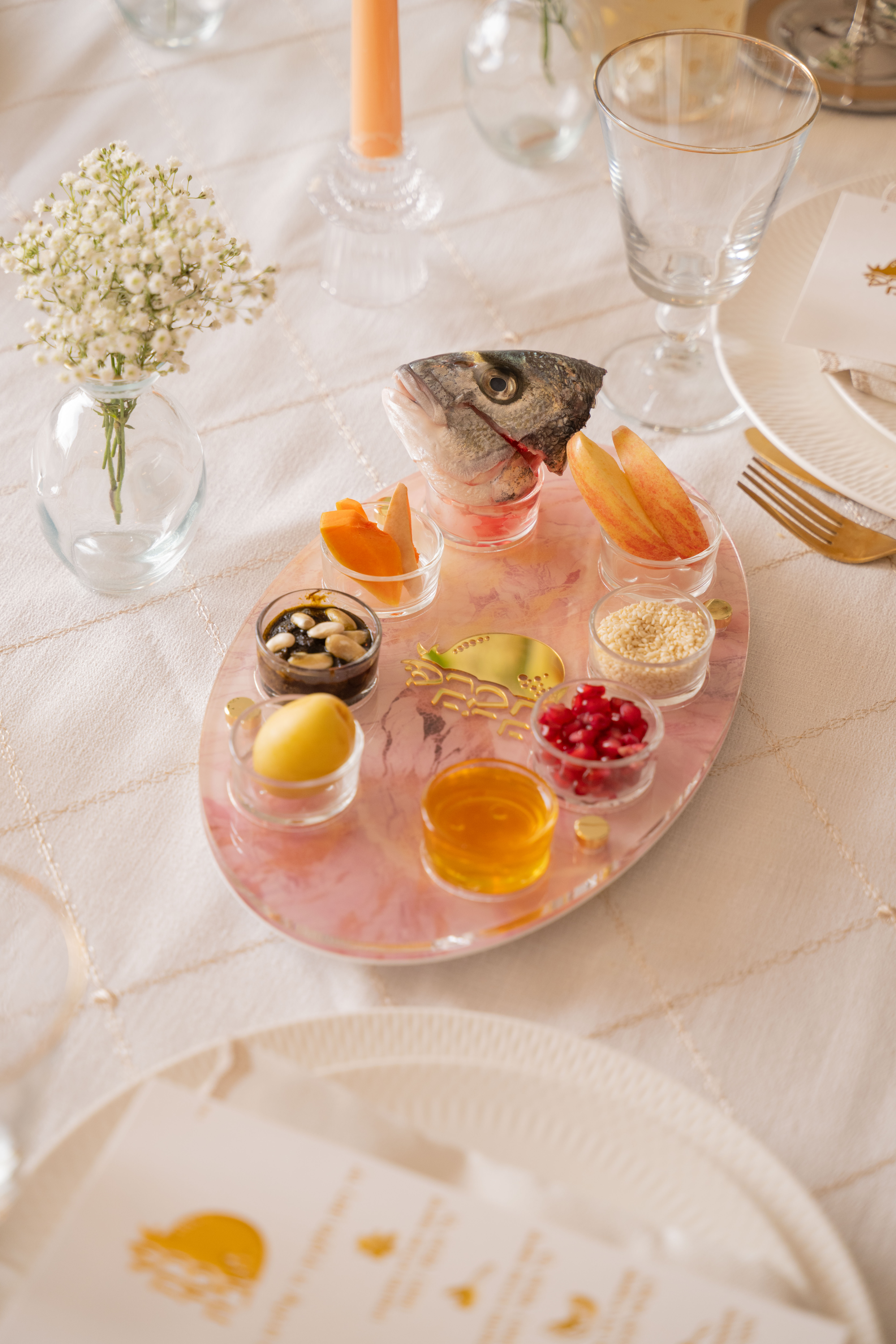
In many families, especially Sephardic ones, the ritual is gladly extended with a lovely series of foods. Each one is introduced by a short Yehi Ratson — “May it be Your will that…” — often built on a play on words with the Hebrew or Aramaic name of the food.
Depending on the table, you may find:
- the date, so that what weighs us down may depart;
- squash, beetroot and leek, each carrying its own wish;
- the pomegranate and its countless seeds, an image of a year rich in merits;
- the fish head, to be “at the head” and not the tail.
The lists vary from one home to another, and that's just as it should be: what matters is not being exhaustive, but tasting, smiling and wishing together.
Arranging a Beautiful Tray
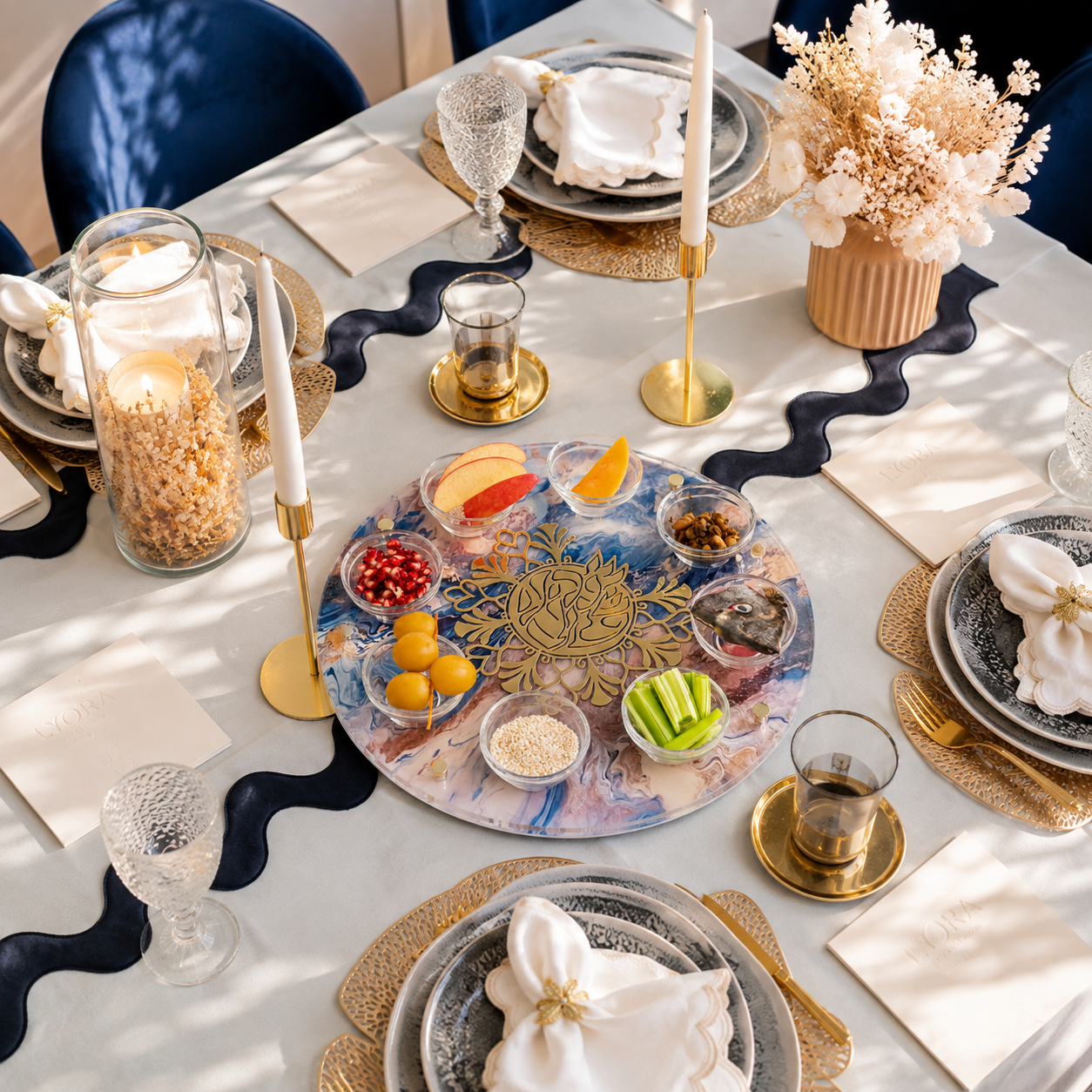
Because these simanim are eaten at the very start of the meal, many families like to gather them on a dedicated tray, set at the center of the table. Seeing all these signs brought together, beautifully presented, turns a simple gesture into a true festive moment that young and old alike look forward to.
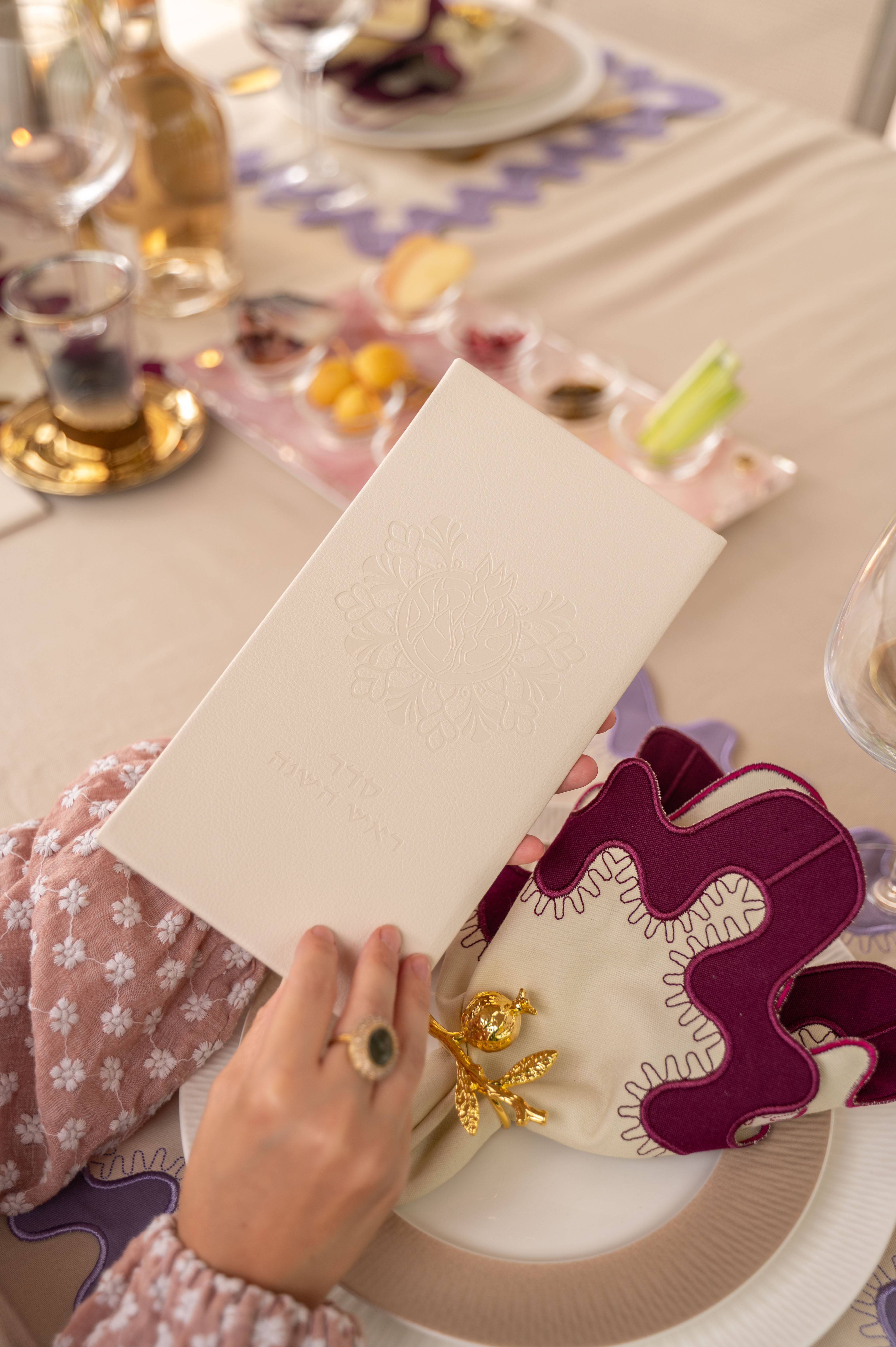
A Rosh Hashanah tray designed for these foods lets everyone serve their wish unhurried, while a Seder booklet helps the whole table follow the wishes, young and old alike. What matters most stays the same year after year: opening twelve new months with sweetness and hope.
Sources: the practice of the simanim (symbolic foods) on the evening of Rosh Hashanah and their “seder” (order) is an ancient tradition, each food accompanied by a wish (“Yehi Ratson”). Practices vary between communities. Editorial summary by Lyora Création — for practice, please consult your rabbi.