Why Is Challah Braided for Shabbat?
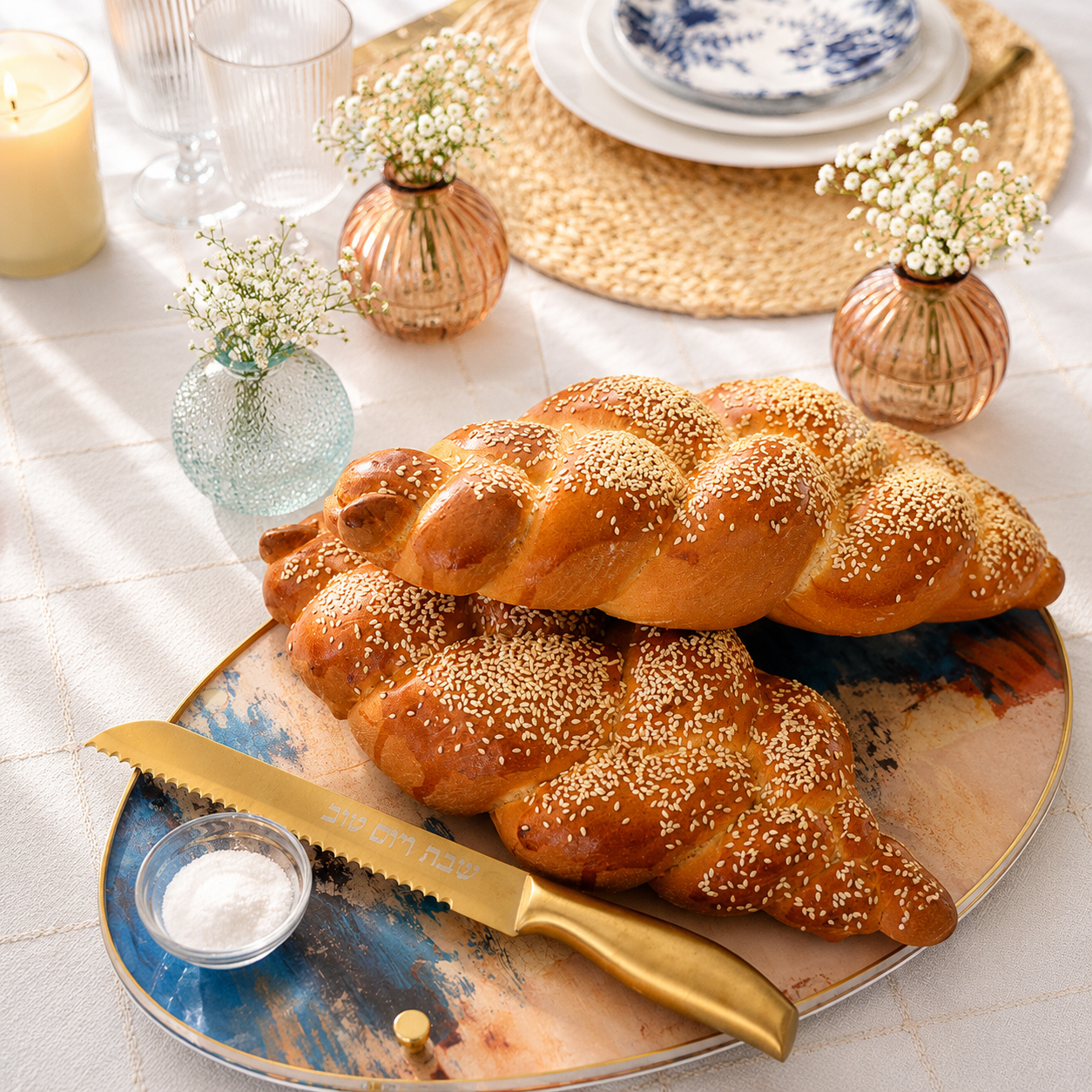
On almost every Shabbat table, the same golden loaf catches the eye: the challah, patiently braided before being shared. But why give it this particular shape, rather than a simple loaf? Behind this ancient gesture lie several meanings, all turned toward unity, beauty and the meaning of the day.
Unity, Strand by Strand
The first reading of the braid is that of unity. Several strands of dough, at first separate, intertwine until they form one single loaf. Many see in this an image of family and the Jewish people gathered in harmony, for the length of a shared meal.
According to tradition, this symbolism speaks for itself: what was scattered becomes a whole. This is first and foremost a symbolic reading, carried by the beauty of the gesture far more than by any religious obligation. That is no doubt why it touches us so: everyone can find in it the idea of loved ones gathered around the Shabbat table. Nothing requires reading this meaning into it; but it offers itself naturally to anyone who takes the time to look at the bread before breaking it.
Braiding the challah means bringing separate strands together into a single loaf, in the image of Shabbat.
Honoring the Holiness of the Day
Braiding the challah is also a way of honoring the special holiness of Shabbat. All week long, bread stays simple, almost utilitarian. When Friday comes, the same dough is transformed: it is worked, shaped, made beautiful and different from the bread of other days.
Many families see in this care a delicate way of recalling that this day is not like the others. One does not simply feed; one prepares something carefully made, almost an adornment, to welcome Shabbat as one would welcome a guest of honor. It is a quiet attention, a form of respect in its own delicacy.
Six Strands, Twelve Loaves
The shape of the braid varies from home to home. The most common practice uses three or four strands, but some families make challahs with six strands. Two loaves shaped this way then total twelve strands.
According to tradition, this number is not chosen at random: it recalls the twelve loaves placed each week on the Temple table. Placing two challahs on the Shabbat table thus becomes a quiet way of keeping alive the memory of this very ancient gesture. From one generation to the next, everyone repeats the same gestures, and the braid connects the present to a long history.
A Harmonious Whole, All the Way to the Table
It could be summed up this way: braiding the challah means uniting several elements to create a harmonious whole. In the image of Shabbat itself, which gathers the family, brings peace, and connects the material to the spiritual, the gesture transforms separate strands into a single loaf.
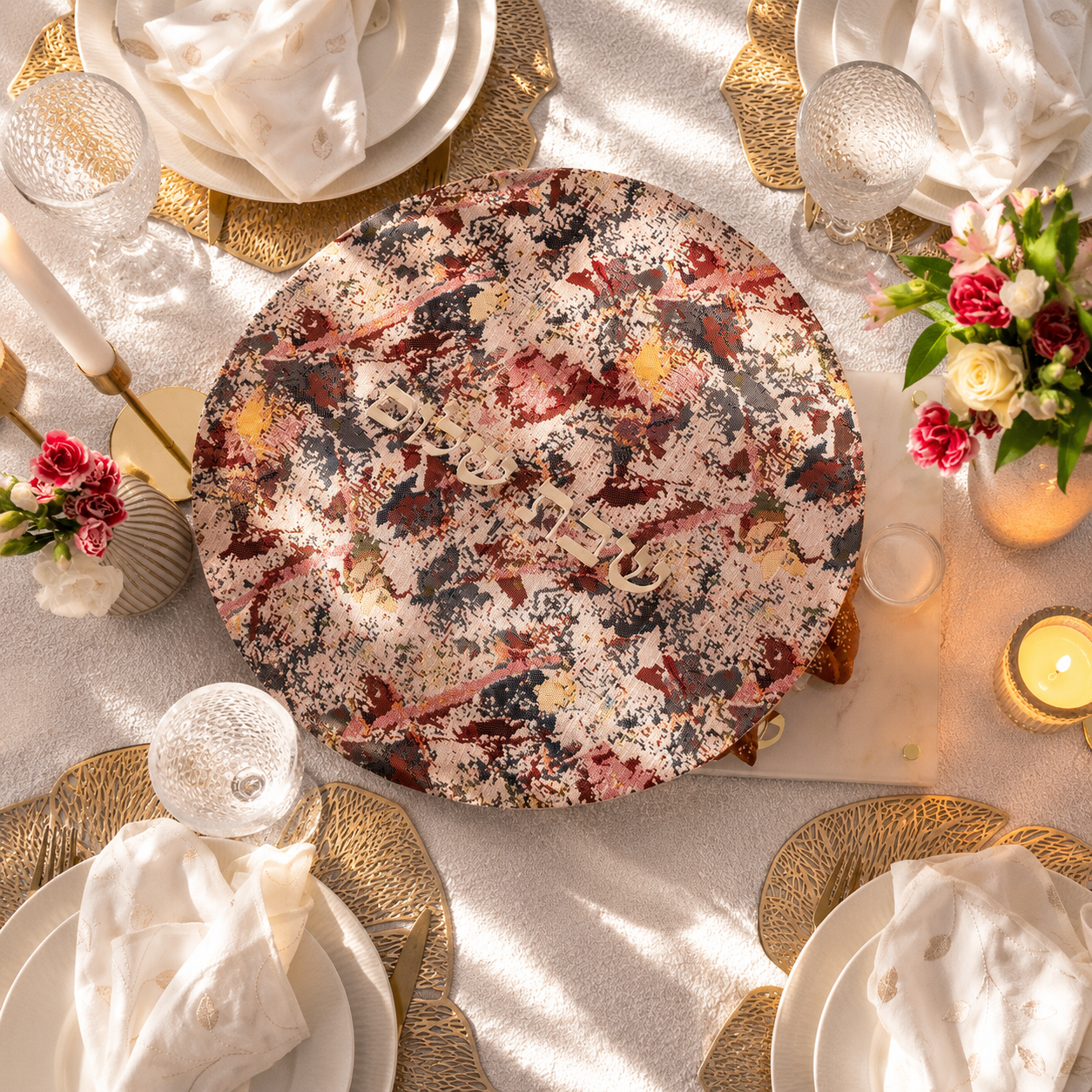
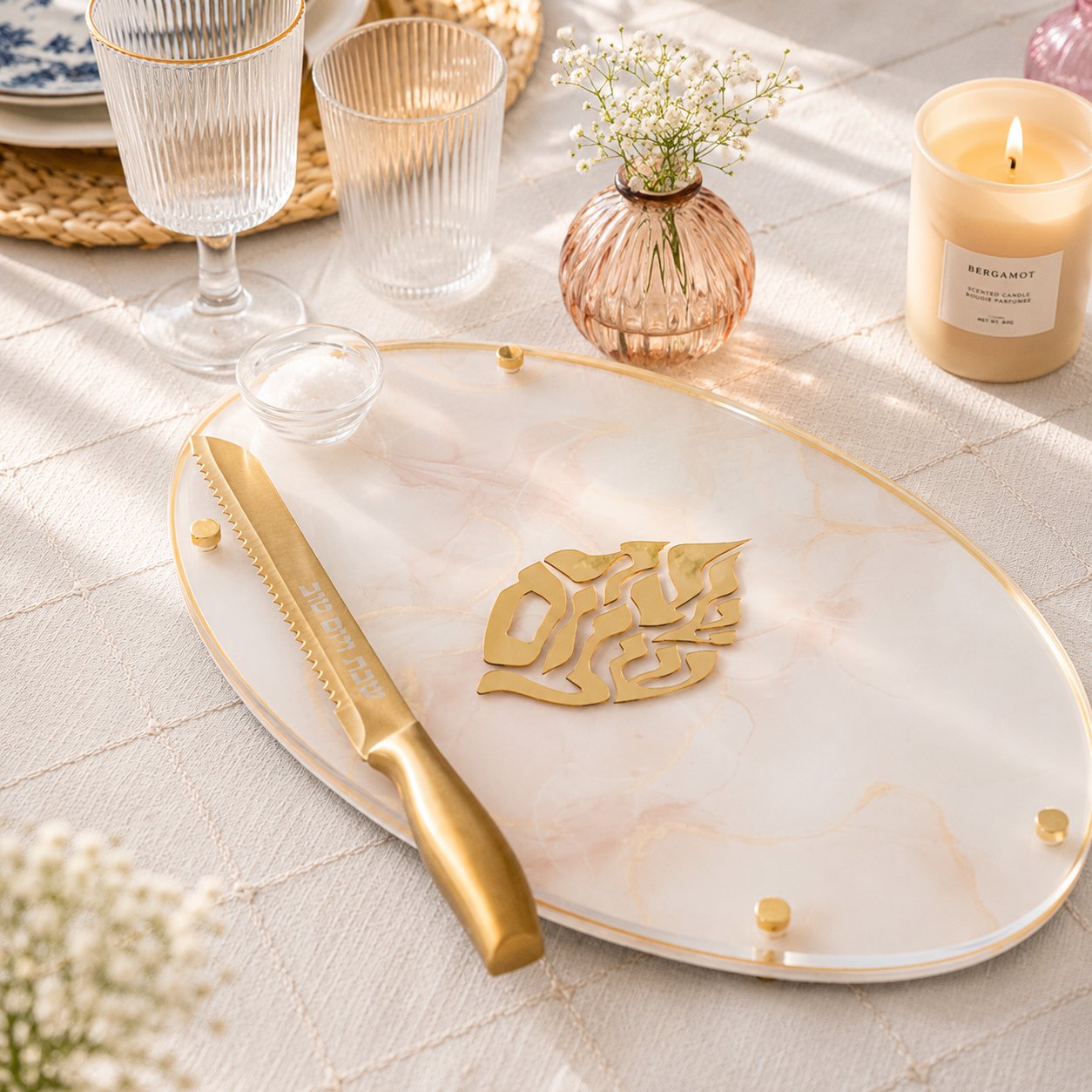
This beauty deserves to carry through to the table. A delicate fabric challah cover that reveals the bread at just the right moment, a challah board that sets it off: simple attentions that extend the care given to the dough. For braided challah is not only good to share; it is also beautiful to look at, and that is already a way of honoring the day.
Sources: braiding the challah is a custom (minhag); the reference to the twelve loaves recalls the showbread (lechem hapanim) placed in the Temple, mentioned in the book of Vayikra (Leviticus). Editorial summary by Lyora Création — for practical guidance, please consult your rabbi.