Why Does the Hanukkiah Have Nine Branches?
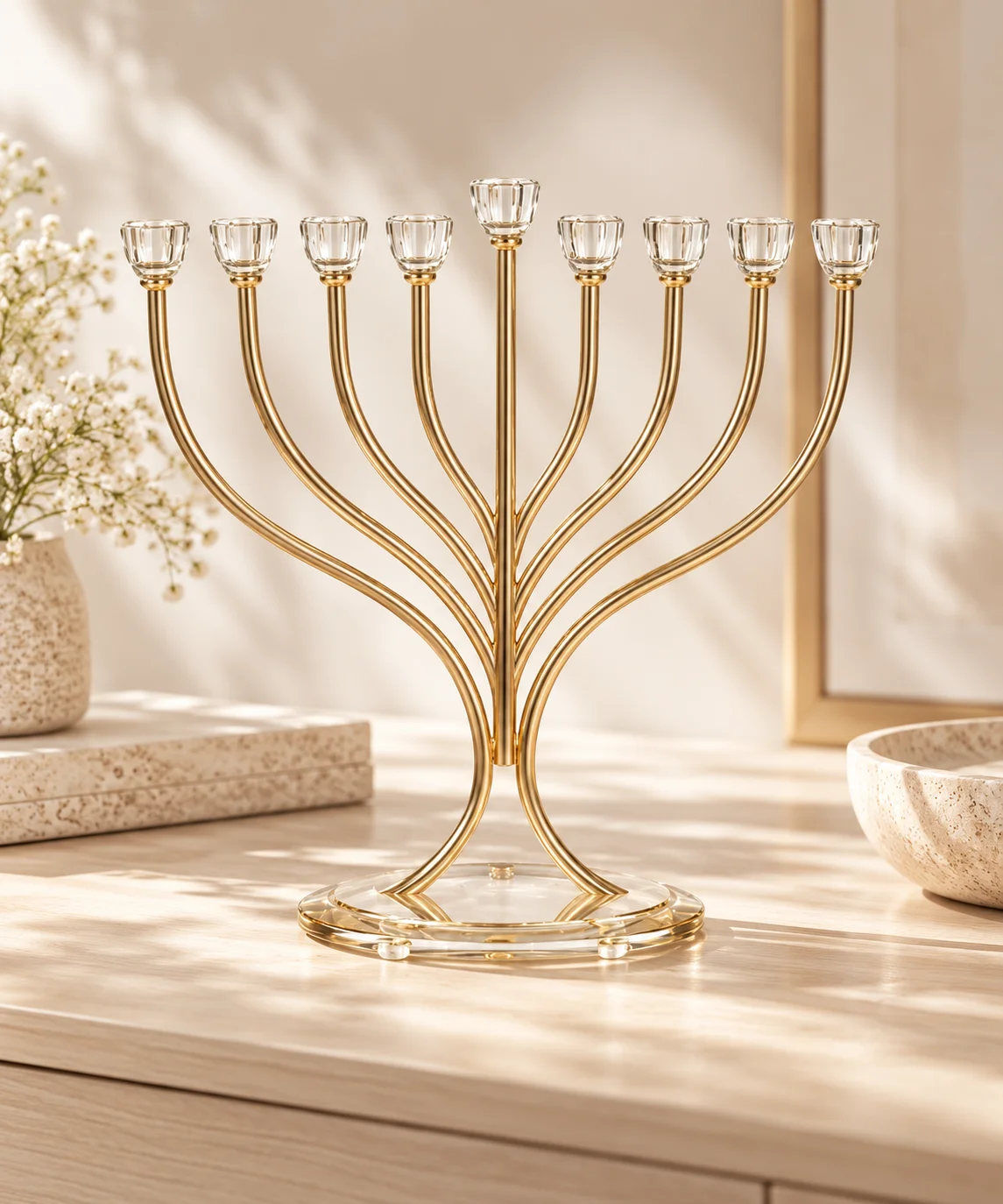
In the Temple, the Menorah had seven branches. On your table, the hanukkiah has nine. The gap is no accident — it tells, on its own, the whole meaning of Hanukkah.
The Temple Menorah, Seven Branches
The original Menorah, described in the Torah, is the seven-branched candelabra that burned daily in the Temple in Jerusalem. Seven is a number rich in meaning in Jewish tradition — that of creation, of Shabbat, of wholeness. It still appears today on the emblem of the State of Israel.
Eight Nights for a Miracle
The hanukkiah, on the other hand, does not commemorate the Temple but a specific miracle: a flask of oil meant to last a single day, which ultimately burned for eight full days. Hence the hanukkiah's eight branches — one for each night of the festival, lit one by one, from the first evening to the last.
And the Ninth? The Shamash
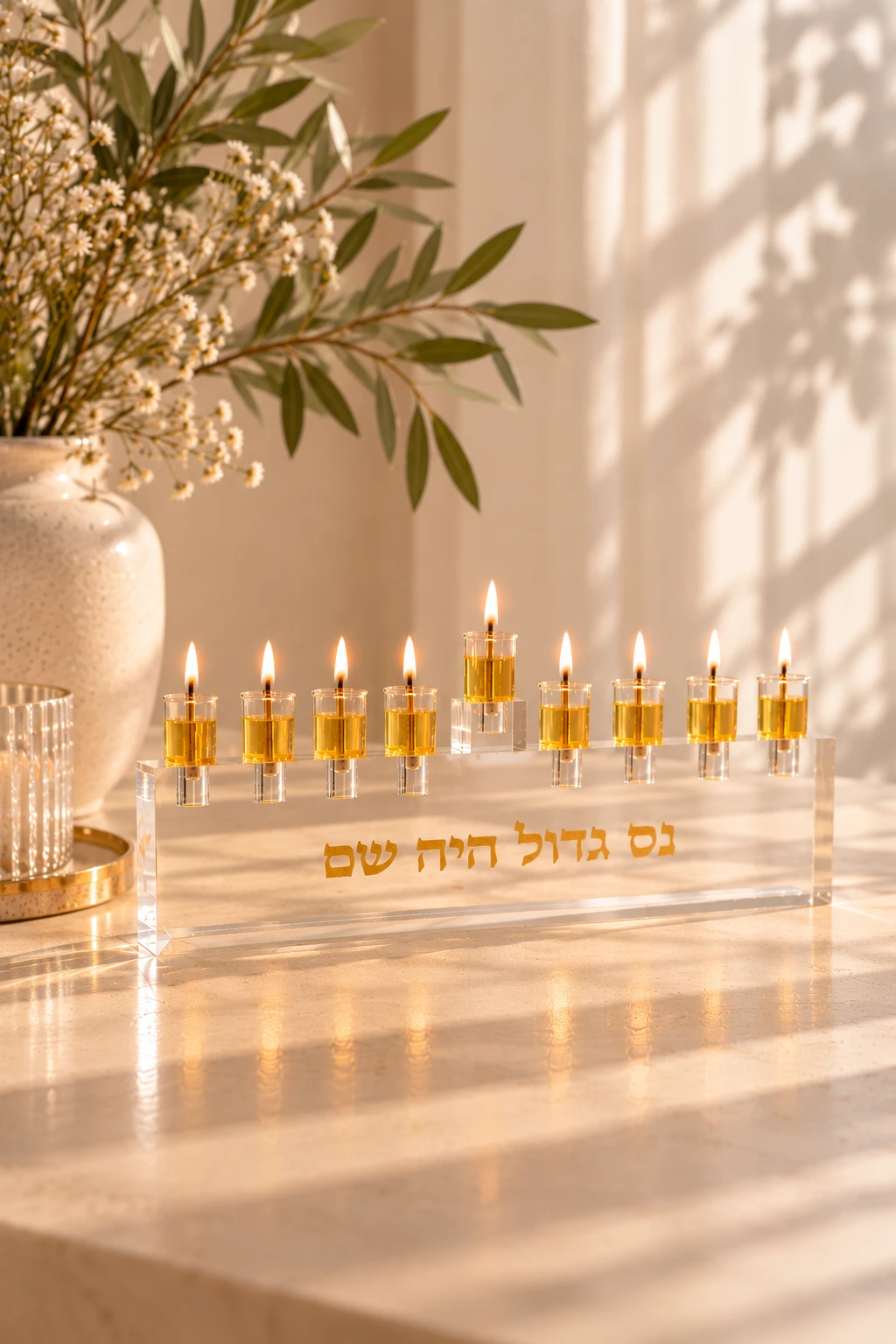
One branch remains: the shamash, the "helper" candle. The eight lights of Hanukkah are sacred — they may not be used for everyday light, nor even lit from one another. A separate flame is therefore needed, lit first, to light all the others. That is the ninth branch.
Why It Must Stand Apart from the Other Eight
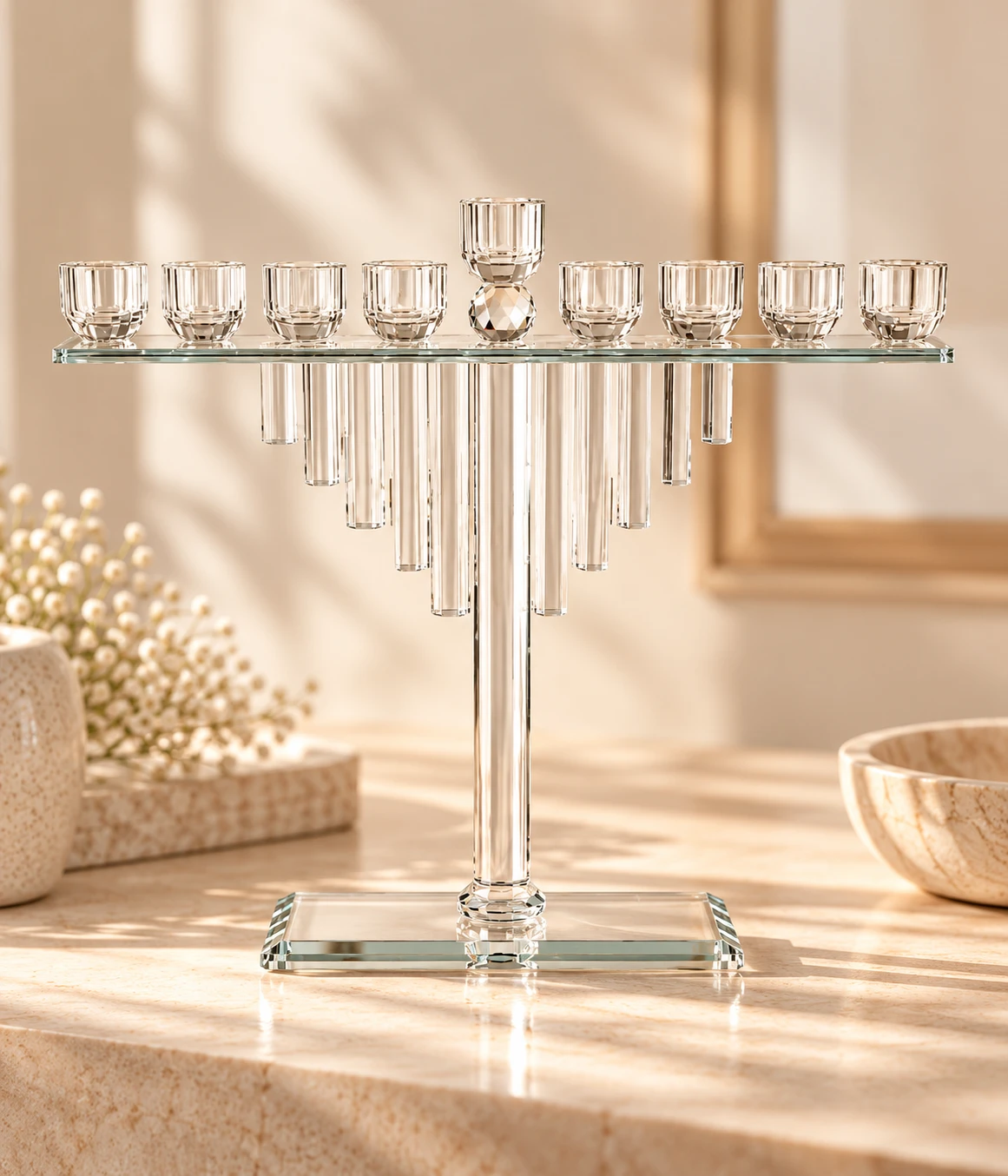
The shamash is not a candle like the others: by tradition, it is placed higher, lower, or slightly set apart from the row of eight. This detail is not just aesthetic — it allows it to be recognized at a glance, so it is never mistaken for the eight sacred lights, and so the hanukkiah does not resemble a copy of the Temple's seven-branched Menorah either.
One More Candle, Each Evening
On the first evening, a single light is lit, plus the shamash. On the last, all eight shine together, still accompanied by their helper. Nine branches, then, but a single purpose: to tell, flame after flame, how a miracle lasted eight times longer than expected.
Eight lights for the miracle, a ninth to light them — that is the whole meaning of the hanukkiah.
Source: the description of the seven-branched Menorah appears in the Book of Exodus (25:31–40); the customs surrounding the shamash and the lighting of the hanukkiah are recorded in the Talmud's tractate Shabbat. Editorial synthesis by Lyora Création.